
Doctors’ freedom of speech must be protected from punitive scrutiny (First published 31 March 2026 by the BMJ)
Public confidence in regulation of doctors demands that complaints are handled transparently and judged on evidence alone, write Rubin Minhas, Nick Maynard, Iain Chalmers, and Gene Feder
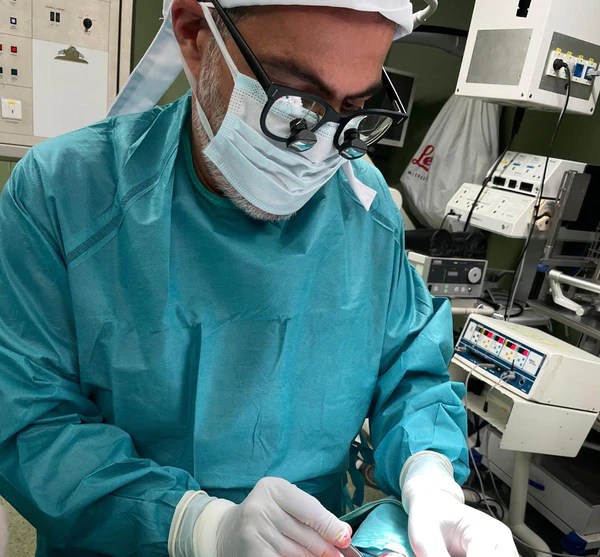
This article cites the case of Dr Ghassan Abu-Sittah, who gave testimony to the international criminal court on Israel’s assault on Gaza and is the rector of the University of Glasgow. He was cleared of misconduct by the Medical Practitioners Tribunal Service (MPTS) in January, to which the case was referred by the General Medical Council (GMC).
The lobby group UK Lawyers for Israel (UKLFI) then made a complaint to the Professional Standards Authority, about the way the GMC prosecuted the case against Dr Abu-Sittah, and about the decision of the MPTS. For example, it says the GMC failed to present most of the evidence to the MPTS regarding Dr Abu-Sittah’s course of conduct in commemorating and supporting terrorism.”
In response, the GMC appealed the dismissal of the complaint by the MPTS. The government has said it intends to remove the GMC’s right of appeal, something the regulator’s chief executive, Charlie Massey, told a parliamentary committee in January that it was “reconciled to”. The change has been in the pipeline for years, with a 2018 review describing a perception that the regulator was “having two opportunities to make its case – first in putting its case for a sanction to the MPTS and then appealing the MPTS decision if it doesn’t ‘agree’ with the GMC’s view”.
The case against Abu-Sittah related to a newspaper article he wrote for a Lebanese newspaper and two posts on X. Ian Comfort, the chair of the panel, said the tribunal did not “cherrypick” quotes from the article but considered it in its entirety and could not identify anything that was antisemitic or supportive of terrorism or violence. The barrister said the tweets, which related to Hamas and the Popular Front for the Liberation of Palestine, could not be seen as inciting or supporting violence or terrorism.
Abu-Sittah said: “I do not, and have never, supported violence against civilians. The allegations made against me were rejected by the tribunal and, in my view, form part of a broader attempt to discredit my professional and humanitarian work.” He said he had received an “outpouring of support from Jewish colleagues, patients and even Israeli co-workers who submitted testimonials to the GMC tribunals”.
A GMC spokesperson said exercising its right of appeal “is something we do with great care and only after detailed consideration. Our focus is protecting the public, and we are satisfied given the nature of the allegations that it is right that we appeal.”
The United Nations has warned that the world faces the highest number of violent conflicts since 1945.1 At the same time, freedom of speech is contracting globally, with widening gaps between formal protections and personal expression.23
Doctors often feel a duty to speak out about injustice, atrocities, and attacks on healthcare.45678 Yet their public comments are increasingly scrutinised. Complaints to employers and regulators can constrain that speech, particularly when institutions perceive reputational risk. Because doctors’ voices are both trusted and tightly regulated, scrutiny must rest on publicly justifiable standards, not on who complains most or loudest.
Expressions of conscience are common across healthcare—poppies, rainbow badges, and Ukrainian flags—but are not always treated consistently. Expressions that counter the prevailing political position, especially those exposing government or societal inaction, can prompt complaints and risk averse institutional responses. In an era of livestreamed violence, the gap widens between official statements and the human toll being witnessed,9 increasing pressure on doctors and others to speak out publicly.
Between October 2023 and March 2024, the General Medical Council (GMC) reported a sharp rise in complaints about doctors relating to antisemitism and Islamophobia, yet only around 4% proceeded to investigation.10 Complaint volume is a poor indicator of misconduct. It may instead contribute to punitive scrutiny, whereby repeated complaints impose an excessive procedural and psychological burden on doctors who speak about state violence.
The British Palestinian surgeon Ghassan Abu-Sitta, for example, reports facing 10 complaints, including two to the GMC, brought by UK Lawyers for Israel (UKLFI).11 The most recent allegations were not proved by a medical practitioner’s tribunal,12 but the GMC intends to appeal.13 Following a complaint by UKLFI, the Professional Standards Authority (PSA), the body overseeing UK health regulators, has taken the unusual step of joining the appeal.14 The reasoning behind the decision has not been published. Abu-Sitta has raised concerns that such processes can intimidate or exhaust doctors and may undermine confidence in politically sensitive cases.1113
Multiple reports across different settings describe repeat complaints against healthcare staff, inconsistent NHS responses,151617 and perceptions of political interference.18 Together, these raise concerns about consistency in the treatment of humanitarian expression.
After the October 2023 atrocities, the Israeli flag was flown over government buildings, including the Department of Health and Social Care headquarters.19 In contrast, a trainee GP reported being asked to remove a small Palestinian flag from a plant pot after a patient complained and warned that escalating the issue could affect her training progression and fitness to practise.20
Under the Equality Act 2010, genuinely held philosophical beliefs are protected in employment when they are serious, weighty, cogent, and worthy of respect in a democratic society that upholds human dignity and fundamental rights.2122 A tribunal decision under appeal has held that this may include opposition to colonialism and Zionism as a political ideology.23 The protection attaches to belief, though expression may be proportionately regulated.
Professional guidance reflects this distinction. The GMC’s Good Medical Practice recognises respectful, non-discriminatory political or moral expression that does not undermine patient care or public confidence.24 The BMA affirms that criticism of state violence, including condemnation of genocide or crimes against humanity, is legitimate and that criticism of Israel is not in itself anti-Semitic. 25 Expression directed at actions and rights rather than identities may fall within professional and legal standards; collective attribution or discriminatory speech does not.
Doctors who raise concerns publicly may still face complaints that recast legitimate expression as discrimination, creating a chilling effect, whereby silence seems safer than lawful speech. GMC guidance does not clarify how repeated, respectful expression that breaches no professional or legal standard may nonetheless trigger escalating scrutiny solely because of complaint pressure26—an ambiguity the GMC and employers must address.
Escalation may extend from complaint, through the GMC, to oversight by the PSA and beyond. The GMC states that it is “absolutely unacceptable” for referrals to discourage lawful comment or unfairly target doctors.27 That standard must apply across the regulatory pathway, from the GMC to the PSA.
When escalation follows complaint volume without proven misconduct, and without transparent safeguards, the public cannot determine whether decisions reflect evidence, complaint pressure, or political considerations. Nor can it exclude the influence of protected characteristics such as ethnicity, whereby the GMC has acknowledged inequalities in referral and fitness to practise outcomes.28
Despite holding powers to filter serial or vexatious complaints,29 the GMC publishes no data on how those powers are exercised. Without this transparency, it cannot demonstrate that escalation reflects evidence rather than complaint pressure—the very risk it warns others against. Following the government’s recent decision to retain the GMC’s right of appeal and introduce new powers for both the GMC and PSA, escalation must be demonstrably justified.30 Two safeguards are required to uphold procedural fairness without discouraging legitimate complaints.
First, regulators must demonstrate that escalation is based on evidence and standards, not on complaint frequency. Regulators and employers must apply clear, proportionate, and time limited triage thresholds, record reasons for escalation, and publish data on the use of existing powers to filter unfounded serial or vexatious referrals.
Second, aggregate data must be published to enable auditing of fairness and unequal personal impact without identifying any complainant or case. Reporting should include indicators such as repeat sources of complaints, the number of complaints per doctor, and escalation rates by complaint volume.
If escalation follows repeated complaints rather than evidence, it undermines regulation and harms doctors and the profession. Without an auditable transparency standard, the GMC’s governance of lawful professional speech lacks a clear basis, exposing doctors to the risk of punitive scrutiny.
When government responds to politically sensitive speech by widening routes of challenge to independent decisions, the question is no longer whether scrutiny can function as a sanction, but what safeguards are required to prevent that. In a health system governed by the rule of law, complaint pressure must never substitute for evidence—and the GMC and employers must be able to demonstrate that it does not.
Footnotes
- Competing interests: NM is chair of the board of trustees of Medical Aid for Palestinians. GF is a board member of the Foundation for Family Medicine in Palestine. The authors declare they have no other conflicts of interest.
- Use of AI: The manuscript was conceived and written by the authors. AI-enabled Microsoft Word suggestions for grammar and syntax were occasionally incorporated.
- Provenance: not commissioned, not externally peer reviewed.
References
Guterres A. “War’s greatest cost is its human toll,” secretary-general reminds Peacebuilding Commission, warning of “perilous impunity” taking hold. United Nations. 3 Nov 2022. https://press.un.org/en/2022/sgsm21216.doc.htm
Global expression report 2023. Article 19. 5 Jul 2023. https://www.article19.org/resources/the-global-expression-report-2023/
Poushter J, Smerkovich M, Fagan M, Prozorovsky A. Free expression seen as important globally, but not everyone thinks their country has press, speech and internet freedoms. Pew Research Center. 24 Apr 2025. https://www.pewresearch.org/global/2025/04/24/free-expression-seen-as-important-globally-but-not-everyone-thinks-their-country-has-press-speech-and-internet-freedoms
Rubenstein L, Haar RJ, Amon JJ. Attacks on healthcare in war are being steadily normalized—we need to end impunity. BMJ2025;390:r1964. doi:10.1136/bmj.r1964 pmid:40973435
British Medical Association. Medicine under attack: the increasing assault on healthcare in conflict zones. 22 Jul 2025. https://www.bma.org.uk/what-we-do/working-internationally/our-international-work/medicine-under-attack-the-increasing-assault-on-healthcare-in-conflict-zones
Ali A, El-Taji O, Nott D, Chai AS. A study on the patterns of war related injuries in Gaza was born out of necessity. BMJ2025;390:r2002. doi:10.1136/bmj.r2002 pmid:40998455
El-Solh S, Smith J, Nimerawi A, Gilbert M. Torture and health worker complicity in Israeli detention sites. BMJ2025;391:r2347. doi:10.1136/bmj.r2347 pmid:41203412
Minhas R, Shellah D, Maynard N, Goodwin-Gill G, Chalmers I, Feder G. Medicine’s reckoning with genocide and crimes against humanity. BMJ2025;391:r2277. doi:10.1136/bmj.r2277 pmid:41167643
Mahase E. Wes Streeting’s Mandelson texts: Israeli war crimes, US drug tariffs, and tech companies. BMJ2026;392:s269. doi:10.1136/bmj.s269 pmid:41667195
Parr E. Doctors face increasing GMC referrals for Israel–Palestine comments. Pulse. 17 May 2024. https://www.pulsetoday.co.uk/news/regulation/doctors-face-increasing-gmc-referrals-for-israel-palestine-comments/
Tribunal finds no basis for misconduct in GMC case against Dr Ghassan Abu-Sittah. Bindmans. 9 Jan 2026. https://www.bindmans.com/news-insights/news/tribunal-finds-no-basis-for-misconduct-in-gmc-against-dr-ghassan-abu-sittah/
Medical Practitioners Tribunal Service. Dr Ghassan Abu-Sitta. 2026. https://www.mpts-uk.org/hearings-and-decisions/tribunal-hearings-and-decisions/dr-ghassan-abu-sitta—jan-26
Siddique H. UK surgeon cleared of antisemitism criticises GMC’s plan to challenge ruling. Guardian. 2 Mar 2026. https://www.theguardian.com/society/2026/mar/02/uk-surgeon-cleared-antisemitism-criticises-gmc-challenge-ruling
Dyer C. Abu-Sitta case: New regulator joins appeal effort on doctor cleared of supporting terrorism. BMJ2026;392:s495. doi:10.1136/bmj.s495 pmid:41825892
Carey A. NHS trust breached Equality Act over uniform policy aimed at curbing political symbols, staff claim. Local Government Lawyer. 19 Jun 2025. https://www.localgovernmentlawyer.co.uk/healthcare-law/405-healthcare-news/61325-nhs-trust-breached-equality-act-over-uniform-policy-aimed-at-curbing-political-symbols-staff-claim
Siddique H. NHS nurse ordered to remove “antisemitic” watermelon video call background launches legal action. Guardian. 18 Jun 2025. https://www.theguardian.com/society/2025/jun/18/nhs-nurse-ordered-to-remove-antisemitic-video-of-watermelon-launches-legal-action
Barts Health NHS Trust employees challenge “discriminatory” uniform policy silencing Palestinian support. Leigh Day. 19 Jun 2025. https://www.leighday.co.uk/news/news/2025-news/barts-health-nhs-trust-employees-challenge-discriminatory-uniform-policy-silencing-palestinian-support
Esmail A. Political interference in medical regulation makes for bad policy. BMJ2025;391:r2434. doi:10.1136/bmj.r2434
College of Arms. Attacks on Israel: flag instructions. 8 Oct 2023. https://www.college-of-arms.gov.uk/news-grants/news/item/218-attacks-on-israel-flag-instructions
Faragher J. Trainee GP who displayed Palestine flag sues for discrimination. Personnel Today. 17 Sep 2025. https://www.personneltoday.com/hr/trainee-gp-palestine/
UK Public General Acts. Equality Act 2010. 2010. https://www.legislation.gov.uk/ukpga/2010/15/contents
Grainger plc v Nicholson. Employment Appeal Tribunal (EAT). 2010; UKEAT/0219/09/0312. https://www.bailii.org/uk/cases/UKEAT/2009/0219_09_0311.html
Miller v University of Bristol. Employment tribunal (Bristol). Judgment, 5 Feb 2024. Case no. 1400780/2022. https://www.judiciary.uk/wp-content/uploads/2024/02/Miller-judgment-1400780.2022-JDT.pdf
General Medical Council. Personal beliefs and medical practice. GMC professional standards guidance. 2024. https://www.gmc-uk.org/professional-standards/the-professional-standards/personal-beliefs-and-medical-practice/personal-beliefs-and-medical-practice
British Medical Association. ARM 2025: BMA passes resolutions on international relations. BMA Media Centre. 25 Jun 2025. https://www.bma.org.uk/bma-media-centre/arm-2025-bma-passes-resolutions-on-international-relations
General Medical Council. Using social media as a medical professional. GMC professional standards guidance. 2024. https://www.gmc-uk.org/professional-standards/the-professional-standards/using-social-media-as-a-medical-professional/using-social-media-as-a-medical-professional
General Medical Council. Doctors taking part in protests or other forms of activism. 30 Jul 2024. https://www.gmc-uk.org/news/news-archive/doctors-taking-part-in-protests
General Medical Council. Fair to refer? Reducing disproportionality in fitness to practise concerns reported to the GMC. 2019. https://www.gmc-uk.org/cdn/documents/fair-to-refer-report_pdf-79011677.pdf
Dyer C. GMC consults on dropping vexatious complaints at an early stage. BMJ2009;338:b625. doi:10.1136/bmj.b625 pmid:19218329
Iacobucci G. GMC to get new powers to crackdown on doctors over racism and antisemitism. BMJ2026;392:s568. doi:10.1136/bmj.s568 pmid:41876131

