
On 26th March 2026 we held a discussion about the situation in Cuba informed by two knowledgeable speakers.
Bernard Regan, National Secretary of the Cuba Solidarity Campaign, has led trade union delegations to Cuba, and is also a trustee of the National Education Union. He is the author of ‘The Balfour Declaration: Empire, the Mandate and Resistance in Palestine’ (2018).
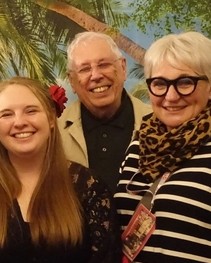
Claudia Turbet-Delof, a Hackney councillor, feminist, community organiser and proud Bolivian-Londoner. After arriving in London, she worked as a cleaner in homes and offices across the city, witnessing first-hand the precariousness and exploitation of the expanding gig economy. She is driven by a lifelong commitment to dignity, workers’ rights and collective power and has engaged in struggles in Latin America over several years. She recently returned from Cuba where she visited relatives.
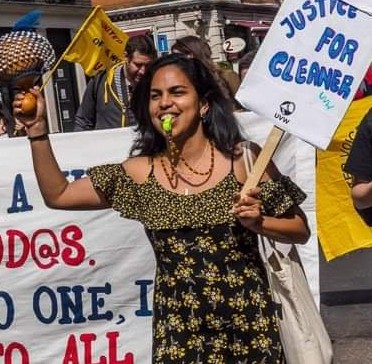
Bernard Regan, National Secretary of the Cuba Solidarity Campaign, spoke about the ongoing 66-year U.S. blockade of Cuba, explaining how it has intensified under Trump with measures like the Helms-Burton Act and re-designation as a state sponsor of terrorism.
He detailed how the blockade impacts Cuba’s healthcare system, including challenges with sourcing medicines, equipment, and oil, leading to growing waiting lists for treatments and increased infant mortality rates.
Bernard concluded by highlighting international solidarity efforts, including a food and medical equipment shipment from the Cuba Solidarity Campaign, and called for the UK government to take more concrete action against the blockade.
Claudia Turbet-Delof, member of Hackney Borough Council, spoke about the impact of the US blockade on housing. She found that expectations were high, for example delays in receiving new housing after a floor collapse were complained of but were actually shorter than for British tenants. She also discussed the difficulty of sending remittances to Cuba.
She was a beneficiary of Cuban medical solidarity in Bolivia, where her mother received treatment from Cuban doctors.
She underlined that Cuba has survived the US blockade for over 60 years through public planning, rationing for equity, and international solidarity. The Cuban government’s response should be understood as surviving an inhumane blockade rather than as failures.
Claudia characterised the Cuban food rationing system (Libreta) as an example of affordable, healthy food provision that differs from the UK’s approach to food assistance.
Bernard reported that approximately 250,000 young people have left Cuba in recent years, reducing the population to around 10.5 million He cited economic difficulties and restricted remittances as key factors driving migration.
Claudia emphasized that while many Cubans have left due to economic concerns, they generally remain loyal to their country and don’t engage in anti-Cuban activities abroad, contrasting this with experiences in Bolivia where right-wing exiles promoted fascist ideologies.
A U.S. program offering legal immigration pathways to Cubans, Venezuelans, Nicaraguans, and potentially others, was viewed with suspicion, given that Trump’s administration later revoked protections for many participants.
Bernard explained that General Laura Richardson’s 2023 report to Congress about US military deployment in Latin America was driven by the desire to control abundant natural resources in the region, including rare earth elements and fresh water.
He described how the Cuba Solidarity Campaign manages donations, noting that direct money transfers are difficult but that goods can be sent via container ships at approximately £8,000 per container, often containing items like rice, lentils, and medical equipment.
Questions were raised about the potential impact of the Iran conflict on US foreign policy in Latin America and the strength of the solidarity movement for Cuba in the United States.
With regard to the decline of Cuba’s sugar industry, Claudia and Bernard explained it was due to infrastructure issues and a shift away from monoculture following the end of the Soviet Union trade arrangement, as well as youth migration to the cities.
Cuban doctors work abroad send money back to Cuba. Claudia explained that there are various methods including direct delivery services like Cuba Llama. Despite political tensions, there are also ongoing solidarity efforts between the US and Cuba through organizations like Pastors for Peace.
Regulatory bodies like OFAC, discourage international trade with Cuba through punitive measures. Countries, like those in the African Union, have condemned the blockade but economic and political ties with the US create barriers to breaking the embargo.
Bernard emphasized the need for the UK government to send oil and food to Cuba. Claudia shared insights about Bolivia’s successful reduction of dollarization under Evo Morales. Paradoxically, Margaret Thatcher historically resisted US pressure on UK-Cuba trade.
 shalondon.co.uk